
The reverse sear steak method will change the way you cook steak forever. This simple two-step process delivers perfectly cooked steak every time. Guaranteed.
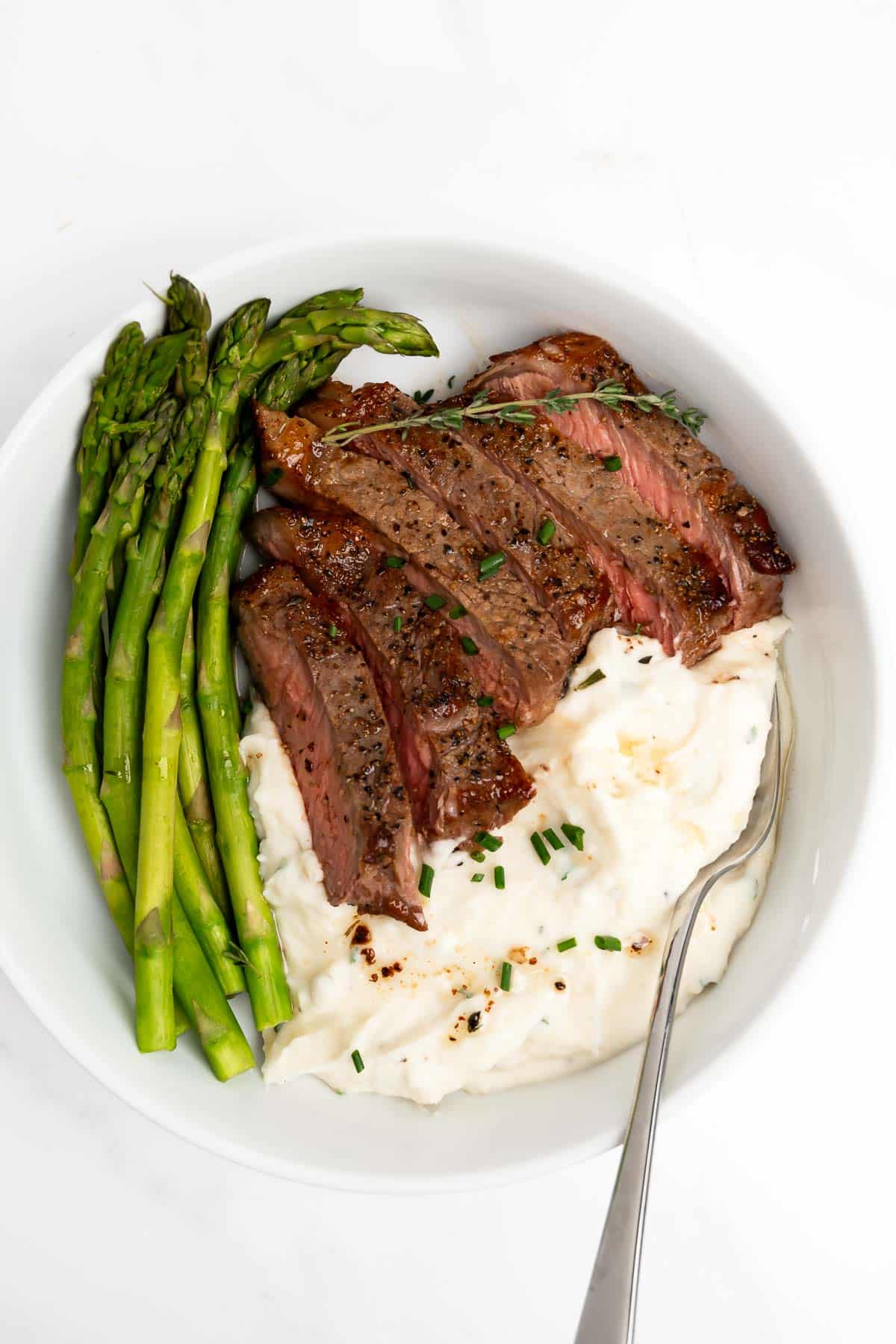
I spend a lot of time cooking on the grill—especially when it comes to steak. But when it's freezing outside and I don't feel like breaking out the sous vide, I need another option for when I still want a really good steak dinner at home. That's where this recipe comes in. Whether it's a family get-together, date night, a holiday, or just because, it always gets the job done.
And this reverse sear steak absolutely delivers! It's super reliable, hard to mess up, and turns out great every single time. The best part? You can make it year-round, no grill required.
Why You Need To Reverse Sear Steak
- Makes the most tender, juicy steak
- Perfectly crispy browned crust with so much flavor
- Ensures a more evenly cooked steak throughout
- Sounds complicated, but actually easy!
Ingredients You Need
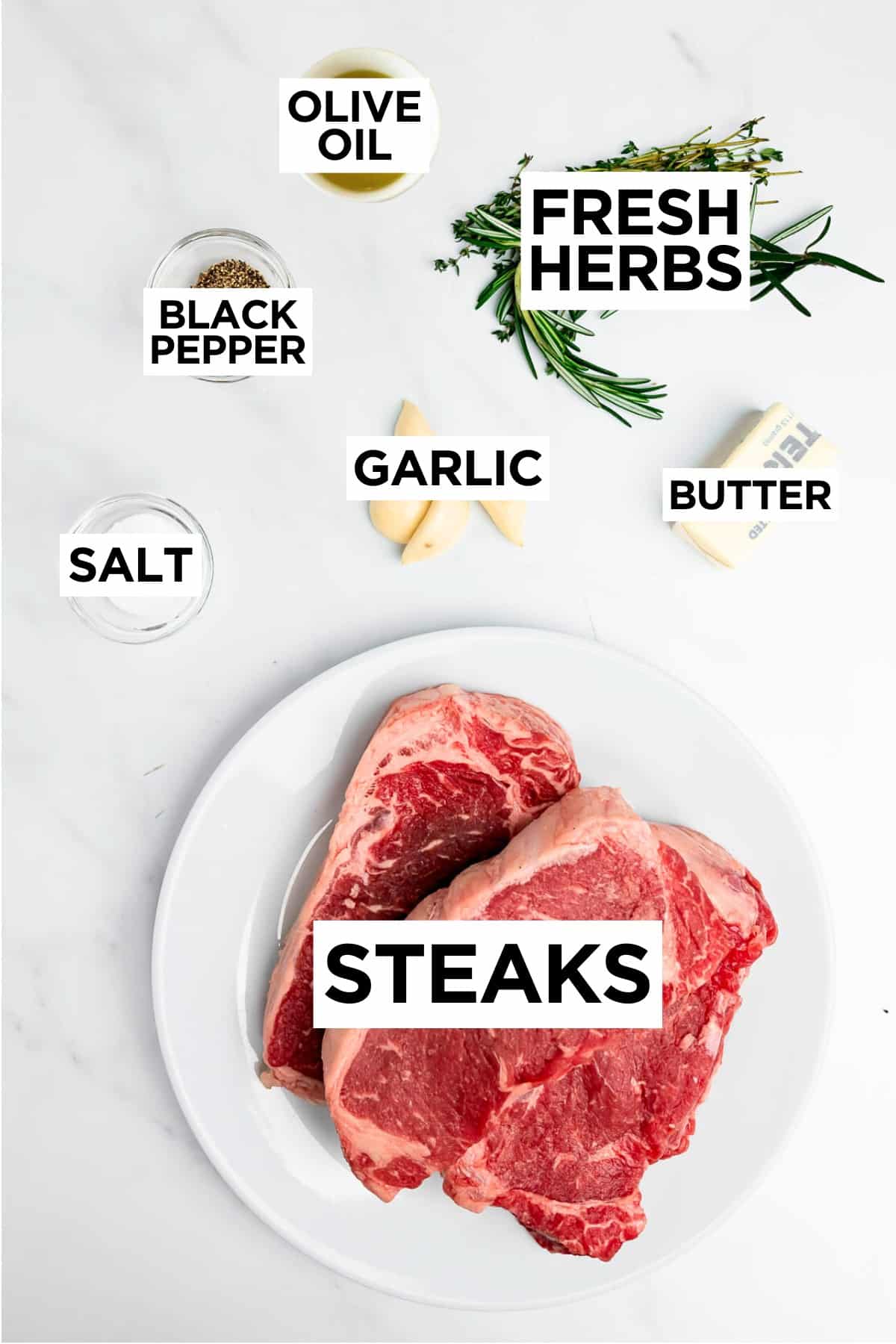
- Steak: This reverse sear method only works for thicker cuts of steak—at least 1.5 to 2 inches thick. My top choices are New York strip, filet mignon, ribeye or top sirloin. Anything under 1 inch will cook too quickly so those are best cooked using other methods.
- Oil: Used for searing. You need an oil that has a high smoke point, like avocado oil, light olive oil, or vegetable oil.
- Butter: Used to baste once the steak is nearly done cooking. With the pan being so hot, you get add toasted flavor to the steak.
- Garlic: You need 4-5 smashed cloves of garlic for added flavor at the end. Avoid using minced garlic as it will burn and ruin the steak.
- Fresh Herbs: Adding fresh herbs like thyme and rosemary flavor the butter that's used to baste the steak at the end.
- Salt & Pepper: I recommend using salt and black pepper to enhance the flavor without overpowering it. However, you can use any type of seasoning you'd like.
Temperature & Timing
The trick to getting perfectly cooked steak every time is getting the time just right. This will vary baed on the thickness of your steak, as well as your oven. It's important to have an instant-read thermometer for this.
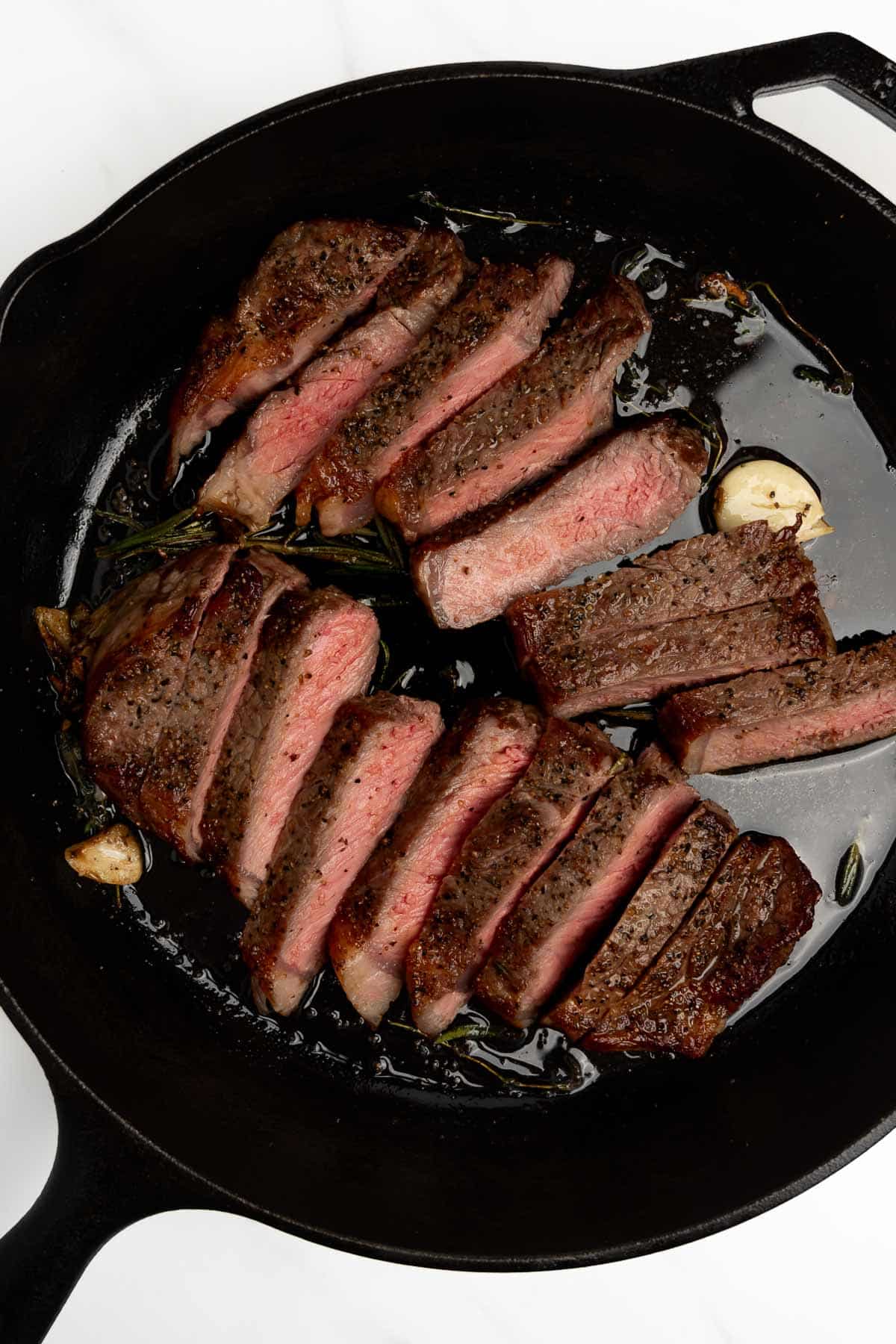
Remember, the steak will raise 15-20º when finished searing to bring the steak to its final temperature. Be sure to remove it right away to avoid over cooking. I always recommend taking it off at the lower end of the doneness threshold to "finish" cooking while it rests.
| Steak Doneness | Temp In Oven | Temp After Sear |
|---|---|---|
| Rare | 95ºF | 120-125ºF |
| Medium Rare | 105ºF | 130-135ºF |
| Medium | 110ºF | 140-145ºF |
| Medium Well | 115ºF | 150-155ºF |
| Well Done | 125ºF | 160-165ºF |
How To Reverse Sear Steak
Start by preheating the oven to 300ºF—this low temperature evenly cooks the steak while you prep any sides. Pat the steaks dry and season generously on all sides.
Success Tip: Use steaks that are at least 1.5 to 2 inches thick. Thicker steaks cook more evenly and give you enough time to develop a good sear without overcooking the inside.
Place the steaks on a wire rack set over a baking sheet, leaving space between them. Bake until the internal temperature reaches your preferred doneness (see the temperature chart above). Using an instant-read thermometer is key here.
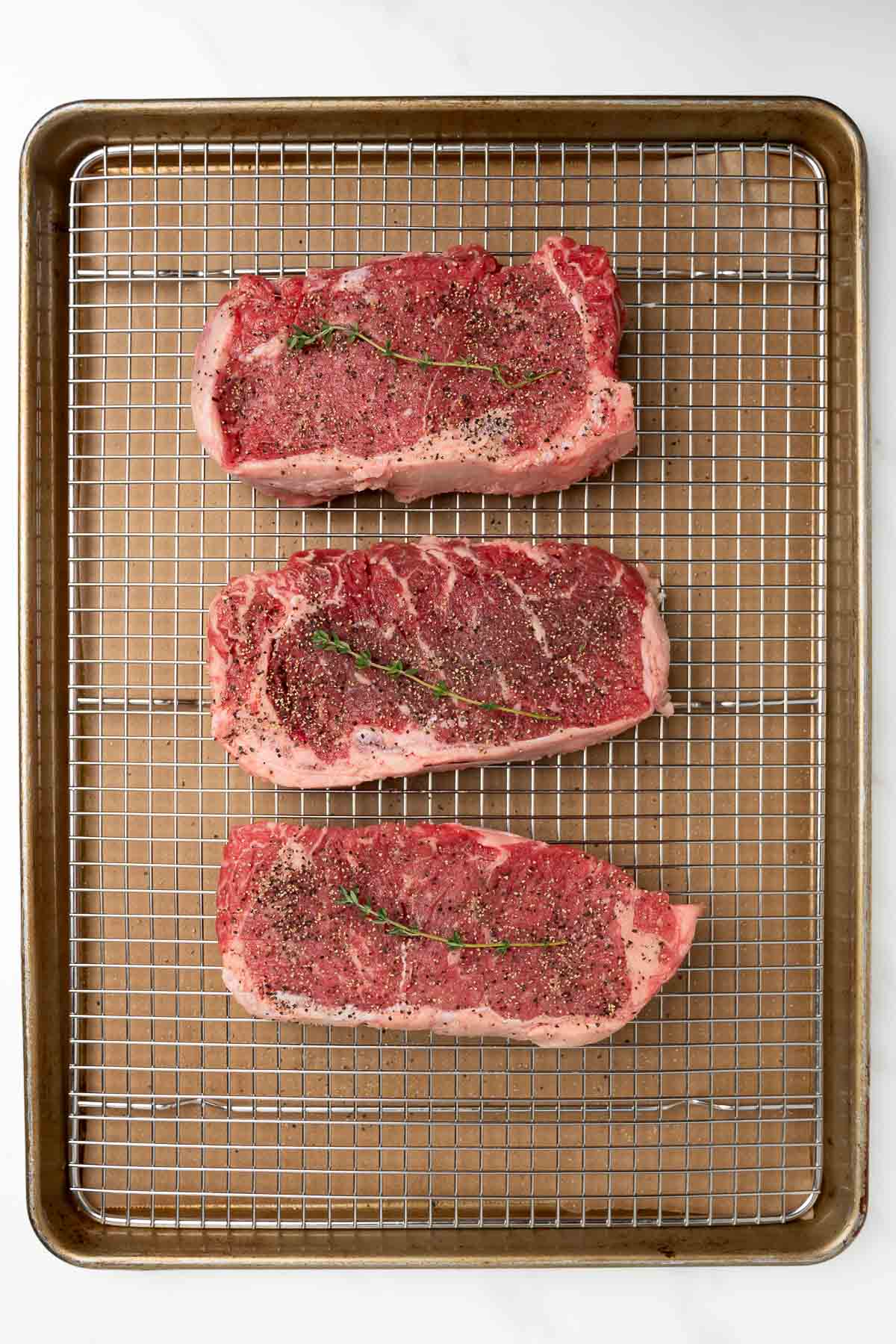
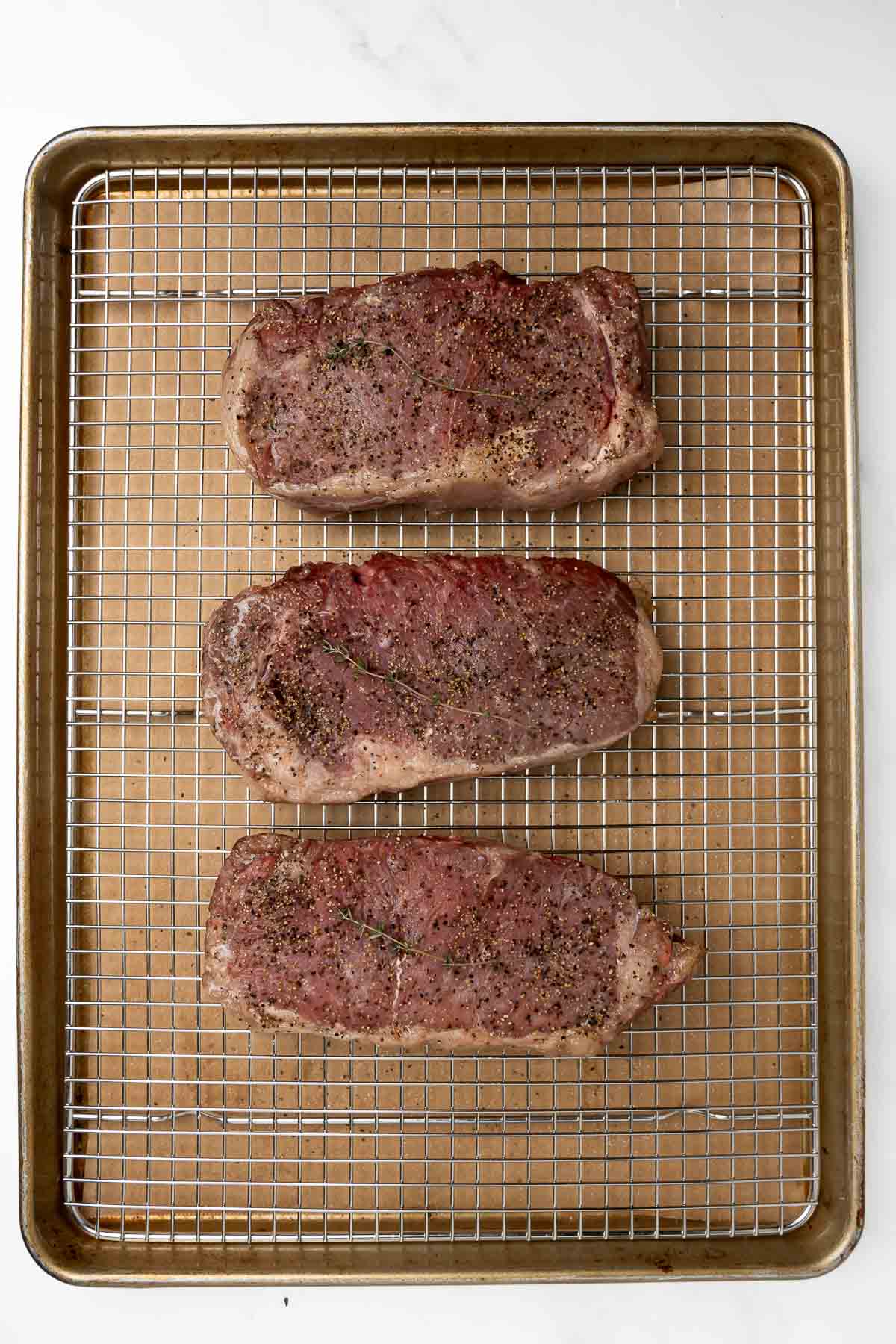
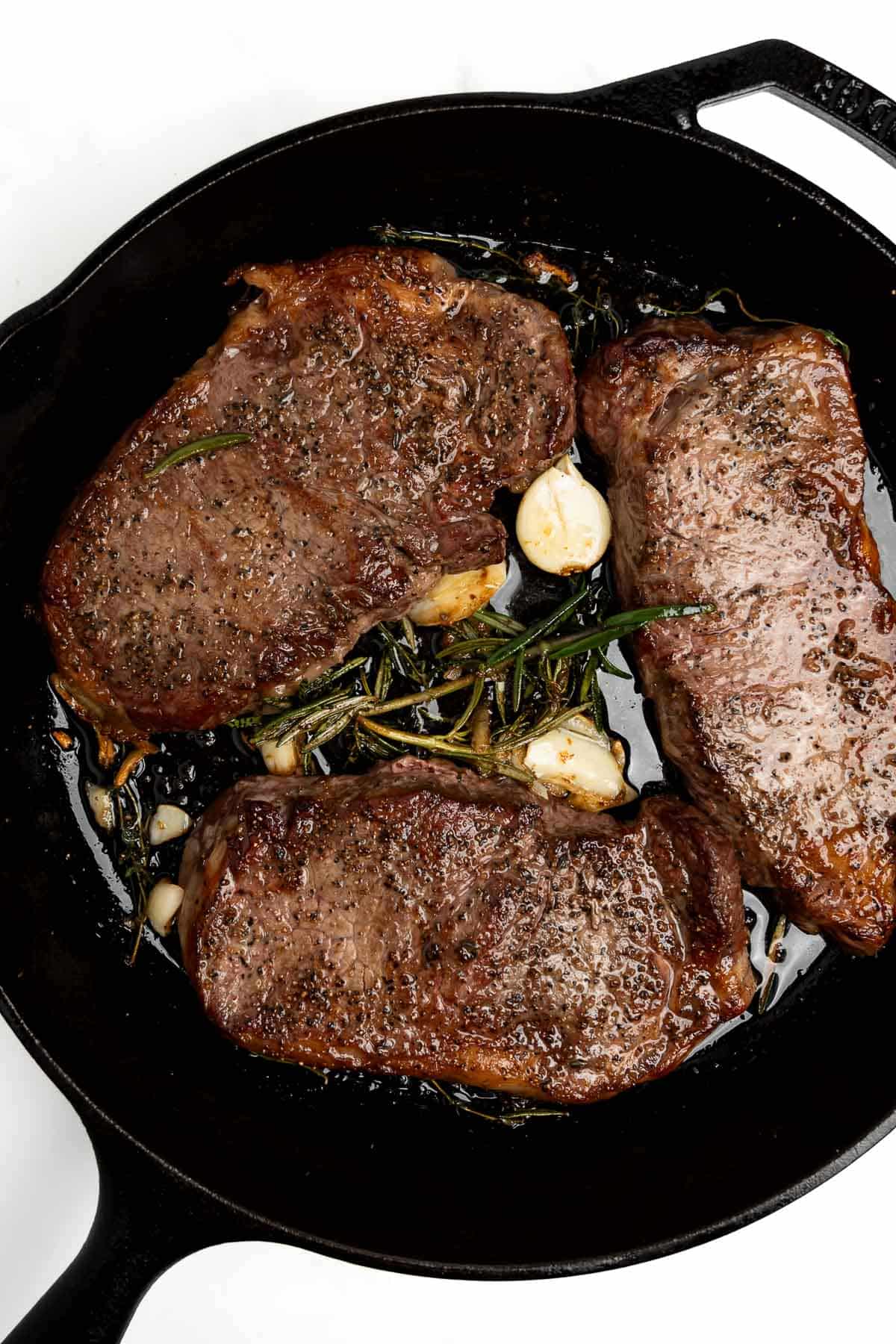
Once the steaks come out of the oven, heat a cast iron skillet (or heavy skillet) over medium-high heat. Add oil and sear the steaks on both sides until a deep brown crust forms, watching the temperature closely. Toss in the butter and garlic, basting the steak until done. Rest for 5-10 minutes before slicing.
What To Serve With Steak
There are so many delicious side recipes that pair perfectly with steak. Think of it like a steakhouse dinner served family-style; roasted asparagus, parmesan roasted brussels sprouts, lemon garlic roasted zucchini, brown butter mushrooms, zucchini fritters, kale and quinoa salad, or cauliflower broccoli au gratin. And of course, you can't go wrong with the classes like a baked potato, creamy mashed potatoes, quick mac and cheese, cheesy scalloped potatoes, and extra creamy mac and cheese.
You could make it surf and turf with blackened shrimp or pesto shrimp. Topping it with chimichurri sauce would be a wonderful addition, too!
FAQs
The baking time depends on the oven temperature and desired doneness. When baking at 300ºF, it will take about 15-30 minutes to reach the initial temperature depending on desired doneness. (95ºF for rare, 105ºF for medium rare, 110ºF for medium, 115ºF for medium well, and 125ºF for well done).
The most common mistakes in reverse searing is using a steak that's thinner than 1.5 inches, not using an instant-read thermometer, baking too long and unable to finish searing.
If you don't have a wire rack that you can bake the steak on, it's important to flip the steak. However, the wire rack will circulate the air enough that you don't need to.

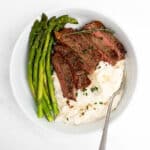
Reverse Sear Steak
Description
Ingredients
- 3 steaks, 1.5 to 2-inch thick, such as ribeye or filet mignon
- 1 ½ teaspoon salt
- 1 teaspoon black pepper
- 1 Tablespoon olive oil
- 3 Tablespoons unsalted butter
- 1 bunch fresh herbs, thyme and rosemary
- 4 cloves garlic
Instructions
- Preheat the oven to 300ºF. Place a wire rack over a baking sheet. Set aside.
- Pat the steaks dry with paper towels, then season generously on all sides with salt and pepper. Place the steaks on to the prepared baking sheet, leaving space between each steak.
- Bake until an instant-read thermometer reads the internal temperature reaches the your preferred doneness. (95ºF for rare, 105ºF for medium rare, 110ºF for medium, 115ºF for medium well, and 125ºF for well done). This will take about 15-30 minutes, depending on thickness and desired temperature. Check often after 15 minutes. Remove the steaks from the oven and set aside. (Note: Use the chart above for overall reference. This is not the final temperature, just to remove from the oven).
- Heat a cast iron skillet (or heavy skillet) over medium-high heat until hot. Add the oil, then sear the steaks on all sides until a deep brown crust forms, about 1-2 minutes per side. Cook until the internal temperature using an instant-read thermometer reaches just below desired doneness. (115-120ºF for rare, 120-125ºF for medium rare, 130-135ºF for medium, 145-150º for medium well, and 155ºF+ for well done).
- Reduce the heat to low and add the butter, garlic and fresh herbs. Once melted, use a spoon to baste the tops of the steaks for 1 minute. Allow the steak to rest for 5-10 minutes before slicing against the grain. Leftovers stay fresh covered in the refrigerator for up to 1 week.
Notes
- Freezing Instructions: The steaks can be seasoned ahead of time, covered and frozen for up to 3 months.
- Steak: Use steaks that are at least 1.5 to 2 inches thick. Thicker steaks cook more evenly and give you enough time to develop a good sear without overcooking the inside.
- Herbs: You can use dried thyme and dried rosemary as a substitute.

Leave a Reply